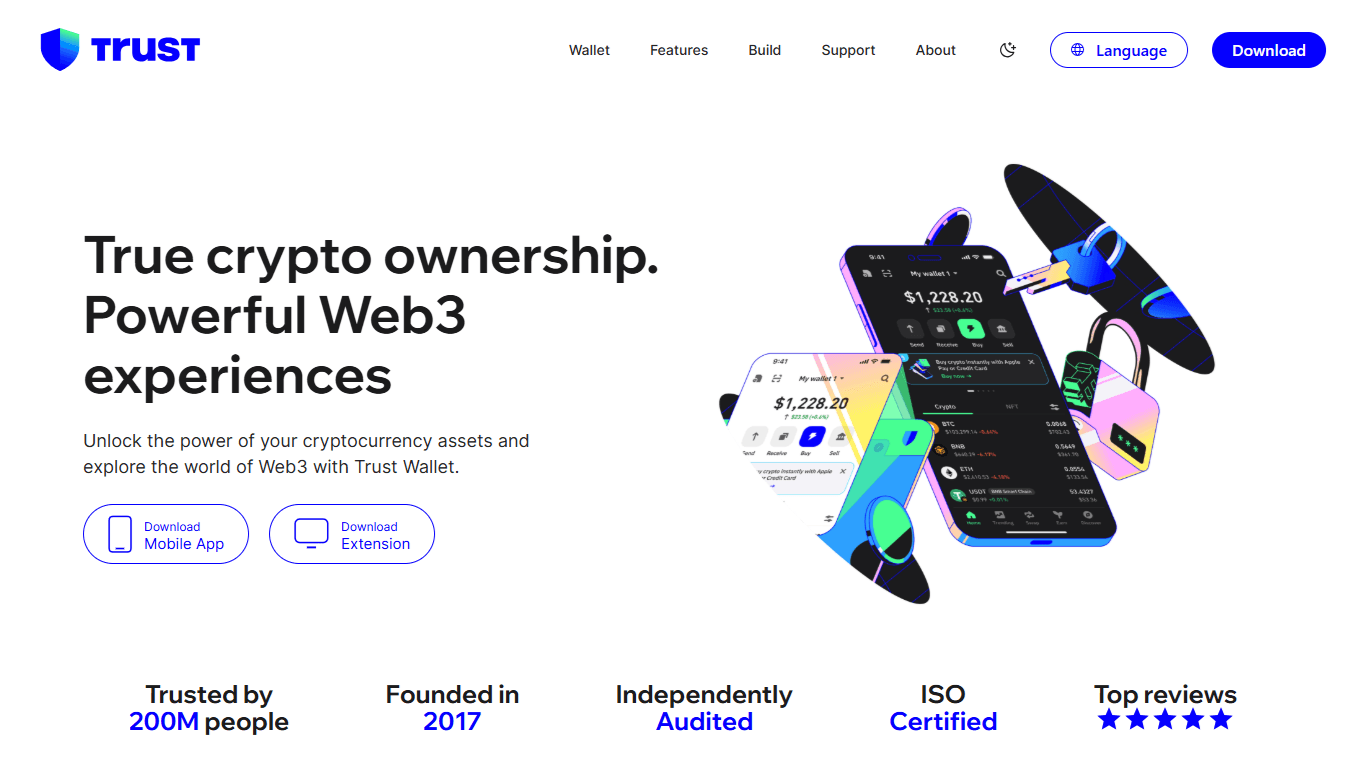
Trust Wallet: A Complete 1200-Word Guide for Beginners and Crypto Users
Trust Wallet is widely known as one of the most accessible, flexible, and user-friendly crypto wallets available today. Designed with a strong emphasis on simplicity, security, and multi-chain functionality, it empowers users to take full control of their digital assets without relying on intermediaries. Whether you are storing tokens, interacting with decentralized applications, or exploring Web3 ecosystems, Trust Wallet provides a unified environment to manage everything in one place.
A Wallet Built for Everyday Crypto Use
At its core, Trust Wallet is a self-custodial wallet, which means you—not a company, not a platform, not a centralized service—retain full ownership of your private keys. This direct ownership is fundamental in the crypto world. It ensures that your assets remain under your control at all times, and no external authority can restrict your access, freeze your funds, or interfere with your transactions.
Trust Wallet supports millions of users who rely on it for everyday crypto interactions. The app runs smoothly on both major mobile operating systems, offering immediate access to your assets with a clean layout and easy-to-navigate interface. It is particularly appealing to beginners because it eliminates complicated steps, but it also scales to meet the needs of advanced users exploring decentralized finance, NFTs, cross-chain swaps, or staking.
Multi-Chain and Multi-Asset Support
One of the strongest advantages of Trust Wallet is its extensive support for multiple blockchains. Unlike wallets that focus on only one network, Trust Wallet allows you to manage a wide range of assets across different chains without switching apps. You can hold cryptocurrencies, stablecoins, non-fungible tokens, and various digital collectibles from numerous ecosystems—all within the same interface.
It supports major blockchains such as Bitcoin, Ethereum, BNB Chain, Solana, Polygon, and dozens more, along with thousands of tokens operating on these networks. This broad compatibility makes it a flexible choice for users who diversify their portfolios across multiple chains.
Trust Wallet constantly updates its supported networks, allowing you to keep pace with the evolving crypto landscape. New tokens can often be added manually using contract addresses when automatic detection isn’t available, making the app adaptable as new assets emerge.
User-Friendly Design With Powerful Features
Trust Wallet strikes a balance between simplicity and capability. The app is built around an intuitive dashboard that displays your asset balance, recent activity, and quick-access actions like send, receive, buy, and swap. Every feature is designed to be accessible even to users who are interacting with crypto for the first time.
Despite this simplicity, the wallet includes a robust set of built-in tools. You can swap tokens across supported chains, manage NFTs, stake certain cryptocurrencies for passive rewards, track market prices, and interact with decentralized applications through the integrated Web3 browser. All these features are packed into a lightweight app that doesn’t feel overwhelming.
Security and Ownership
Security is a major focus of Trust Wallet. As a non-custodial wallet, it stores your private keys locally on your device rather than on a remote server. This ensures that your assets remain protected even if external services experience disruptions.
The most important component of wallet security is the recovery phrase—a set of words generated when you create a new wallet. This phrase is the ultimate key to your assets. Anyone who accesses it can control your funds, so Trust Wallet strongly encourages users to store it securely offline. The app avoids centralized data collection and does not store your recovery phrase, passwords, or private keys on its servers. Everything remains encrypted and within your personal device.
Because the security model depends on user responsibility, Trust Wallet empowers people with full autonomy while emphasizing the importance of safeguarding access information. This approach aligns with the core philosophy of decentralized finance: ownership, freedom, and control.
Buying, Sending, and Receiving Crypto
Trust Wallet simplifies common cryptocurrency actions. You can receive crypto by displaying your address or scanning a QR code generated by the app. Sending assets is equally straightforward—choose the token, enter the destination address, and confirm the transaction.
The wallet also includes built-in support for buying certain cryptocurrencies through integrated third-party partners. These services give users the ability to convert local currency into crypto directly inside the app. While the purchasing process depends on external providers, Trust Wallet streamlines the experience by centralizing these features within a single interface.
Swapping and Exchanging Assets Inside the App
A standout feature of Trust Wallet is the ability to swap tokens without needing to register an account on a centralized exchange. You can exchange tokens across supported networks using liquidity provided by decentralized protocols. The swap interface is simple—select the token you have, choose the token you want, review the rate, and confirm.
This feature is ideal for quick conversions or portfolio adjustments without leaving the wallet environment. It also promotes decentralized trading practices, aligning with the principles of user ownership and financial independence.
NFT and Digital Collectible Management
Trust Wallet includes full NFT support for popular chains, enabling users to store, view, and transfer their digital collectibles. Whether you are dealing with art pieces, gaming assets, or membership tokens, the wallet organizes everything neatly under a dedicated NFT tab.
The in-app viewer allows you to browse your digital assets visually. You can send NFTs to other wallets, receive new ones from marketplaces, or hold them securely as part of your collection. The wallet’s compatibility with Web3 apps also enables users to mint NFTs directly from decentralized platforms and have them appear instantly in their collection.
Integrated Web3 Browser
Trust Wallet’s built-in Web3 browser is one of its most powerful tools. It serves as a gateway to the decentralized world, allowing you to interact with DApps like decentralized exchanges, staking platforms, NFT marketplaces, liquidity pools, blockchain games, and decentralized finance protocols.
Instead of relying on external browsers or complicated connection steps, the Web3 browser provides seamless access to decentralized services. This makes Trust Wallet more than just a storage tool—it becomes a functional hub for exploring and participating in blockchain ecosystems.
Staking and Earning Opportunities
Trust Wallet includes staking functionality for selected cryptocurrencies. Staking allows users to lock their tokens in exchange for rewards, supporting the security and performance of proof-of-stake networks. The app provides clear details on staking rates, reward structures, and lock-up periods, making it easier to make informed decisions.
This feature offers an opportunity to grow your holdings passively without exposing your assets to centralized services. The rewards accumulate over time and can be claimed directly within the app.
A Wallet Designed for the Future of Web3
Trust Wallet continues to evolve as blockchain technology grows. With new networks, scalable features, improved token support, and enhanced security measures, the wallet positions itself as a long-term companion for anyone participating in digital finance.
Whether you are holding crypto for personal investment, exploring decentralized platforms, trading tokens, or managing NFTs, Trust Wallet provides a complete package. Its emphasis on ownership, flexibility, and simplicity makes it suitable for both beginners and advanced users.
By keeping the experience intuitive while offering powerful tools, Trust Wallet stands as a strong gateway to the world of decentralized money and digital freedom.